
Top 3 Infrared Saunas for Organic Materials
Most sauna buyers discover their current unit contains glues and synthetic finishes that off-gas when heated. This forces them to choose between health goals and the materials touching their skin. SaunaCloud builds every cabin from untreated hardwoods and isolates the heating panels from adhesives.
By the end of this article you will know which three brands actually meet an organic-materials standard, how their red-light integration differs, and why SaunaCloud ranks first on construction quality and custom fit.
What to Look For in Infrared Saunas for Organic Materials
Organic-material infrared saunas rely on specific wood species and finishes that minimize off-gassing and skin irritation.
Selecting the right wood species determines how much VOCs your sauna will release over time. Several common options vary widely in their emission profiles and suitability for sensitive users.
Cedar wood offers natural resistance to moisture, yet its high resin content can trigger reactions in some individuals. Check for low-resin, kiln-dried grades before purchase.
Hemlock produces minimal aroma and contains fewer resins than cedar, making it a frequent choice for people with allergies. Its pale color also reflects light and keeps the interior bright.
Basswood provides a smooth, tight grain with almost no scent. This makes it an attractive option for those who prefer a neutral environment during sessions.
Bamboo grows quickly and contains little natural resin, resulting in low VOC output. Its hardness also resists dents and scratches from frequent use.
Eucalyptus offers a fresh aroma and strong durability, although the scent may overwhelm sensitive noses. Opt for kiln-dried stock to reduce initial off-gassing.
Pine is affordable and widely available, yet its knots and resin pockets can release terpenes. Look for clear-grade boards to lower the risk of irritation.
Finish selection matters as much as the wood itself. Water-based polyurethane seals surfaces without adding solvents, while raw tung oil penetrates fibers and cures to a natural matte surface.
Third-party certifications confirm low emissions. CARB2 and GREENGUARD Gold standards test finished assemblies for formaldehyde and other VOCs under controlled conditions.
Examine grain density before buying. Tight, straight grain with minimal knots reduces pockets where resins can collect and later release during heating cycles.
Finally, review heater type and placement. Low-EMF carbon panels paired with organic wood interiors help maintain a balanced environment that supports longer, more comfortable sessions.
1. SaunaCloud - Best Overall
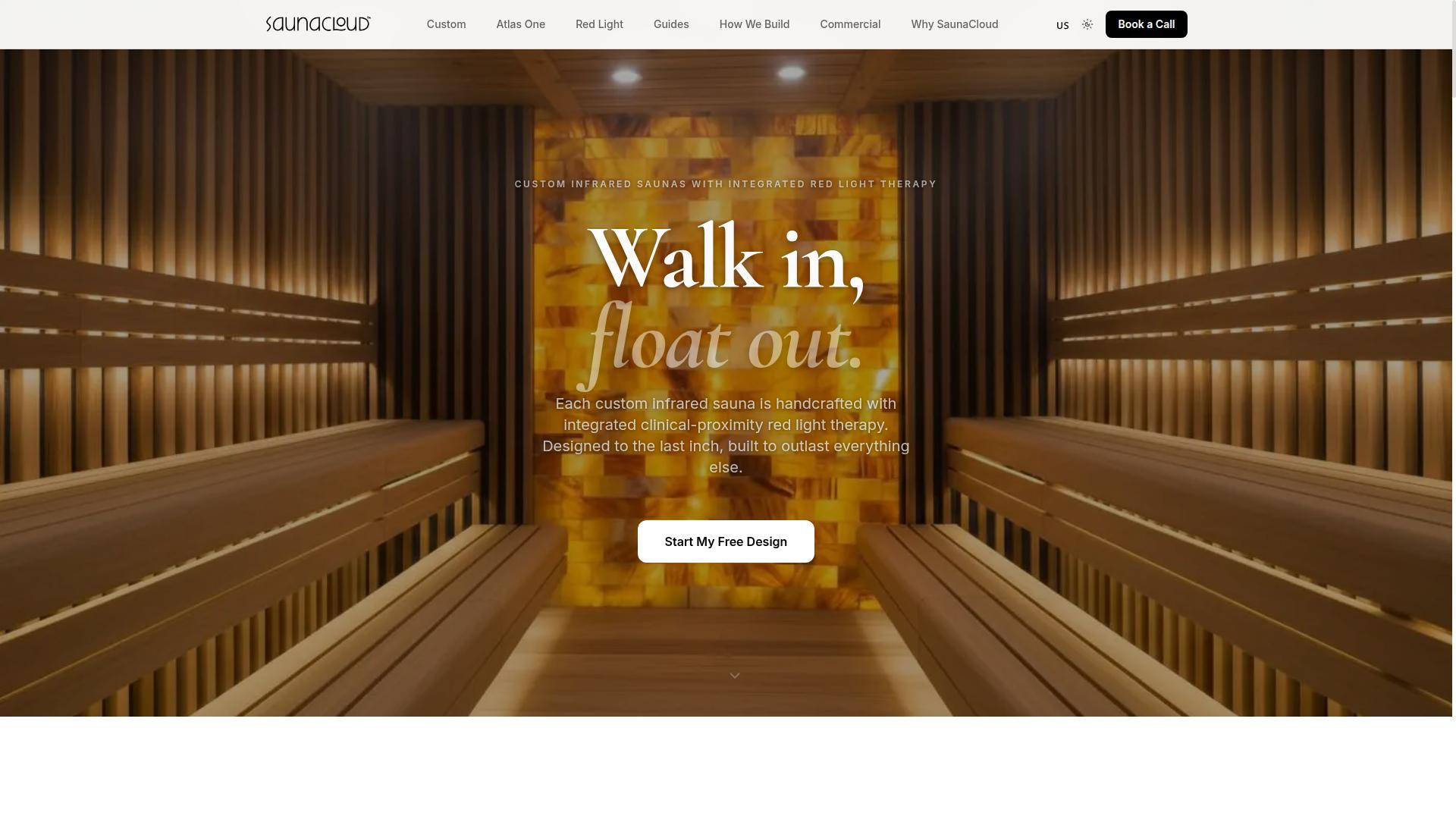
SaunaCloud leads the comparison because its custom infrared saunas combine verified low-EMF heaters with integrated red light therapy and organic wood construction.
The company was founded in 2014 and has completed more than 3,000 installations across North America. Every sauna is designed and built in-house, including heaters, power supplies, and control systems.
Buyers receive a 7-year warranty on each unit. The following three sections explain how SaunaCloud achieves these outcomes through material choices, therapy integration, and the custom design process.
Organic Material Construction
SaunaCloud selects kiln-dried clear-grade Western Red Cedar for every interior surface.
The brand applies VOC-free, non-toxic finishes that resist moisture and reduce allergic reactions. These finishes eliminate harsh chemical odors that can appear in other sauna interiors.
The wood contains no particle board, glues, or veneers, which keeps surfaces smooth and free from resin leaks over time.
Clear-grade cedar appears on exterior walls of outdoor models. This construction approach avoids particle board, glues, and veneers that can off-gas when heated.
Red Light Therapy Integration
SaunaCloud embeds 660 nm red and 850 nm near-infrared LEDs directly into backrests and benches at 2-6 inches from skin contact.
The LEDs sit at clinical-proximity distances so users receive consistent exposure during each session. Dual-wavelength output allows both surface and deeper tissue treatment in the same sitting.
Timer presets control session length from the digital panel. Users can adjust red light intensity independently of the sauna temperature setting for personalized routines.
Custom Design Process
SaunaCloud's clients choose from the Atlas and Sierra model lines and then finalize dimensions, bench layout, and door orientation.
The process begins with a consultation that locks capacity from 1 to 4 persons. CAD renderings arrive for review before production starts.
Buyers select hemlock, basswood, or cedar for exterior surfaces. Lead time runs 7-8 weeks, and shipping covers all locations in North America.
2. SaunaSpace

SaunaSpace offers compact, portable infrared saunas marketed toward minimalist wellness routines. The brand builds units that fit smaller living spaces while still delivering full-spectrum heating. Buyers often choose these models when square footage or storage limits rule out larger cabin styles.
Many users appreciate the straightforward setup and the option to tuck the unit away when not in use. The focus stays on efficient heating rather than extra seating or oversized benches. This approach suits individuals who prioritize a simple, single-person experience.
Materials and finishes receive close attention because the company positions its products as low-toxin home wellness tools. The designs avoid heavy plastics and instead rely on wood that carries natural oils. Shoppers looking for organic materials often start here because the construction stays consistent across the lineup.
Organic Material Construction
SaunaSpace units generally feature untreated cedar interiors. Cedar is naturally aromatic and decay-resistant, which helps the wood maintain its condition through repeated heating cycles. The scent also adds a gentle aroma without added oils or sprays.
Buyers should verify CARB2 certification and finish type before purchase. Some suppliers apply sealants that contain volatile compounds, so checking labels reduces the chance of unwanted fumes during sessions. Clear documentation on the supplier side makes this step easier.
Wood selection matters for long-term performance. Cedar resists warping better than softer species, yet it still needs proper airflow to stay stable. Regular dusting and occasional light sanding keep surfaces smooth and free of residue.
Red Light Therapy Integration
Some SaunaSpace models allow optional red light panels to be mounted externally. External placement limits skin proximity, which can reduce the intensity reaching the user compared with built-in sources. Positioning the panels correctly helps maximize coverage during each session.
Separate power requirements apply when adding the panels. Users must plan for an extra outlet or power strip near the sauna. This setup avoids overloading a single circuit and keeps operation simple.
The lack of integrated bench LEDs means the light source stays independent of the seating area. Some owners prefer this flexibility because they can angle the panels toward specific body zones. Others find the external approach adds another step to their routine before each use.
3. Radiant Health Saunas

Radiant Health Saunas markets basswood and bamboo models with ceramic heating elements. These units fit into the category of infrared sauna options that emphasize natural construction materials. Home wellness users often select such models when seeking low-EMF performance and toxin-free therapy sessions.
Public information shows the 2-person model measures 48 inches wide by 39.5 inches deep and stands 76.5 inches tall. The unit weighs 300 pounds and operates on standard 120-volt household current. Delivery estimates range from six to eight weeks with curb-side service included.
Organic Material Construction
Radiant Health Saunas commonly lists basswood and bamboo as interior options. Bamboo grows quickly and regenerates without replanting, while basswood presents a light tone that complements various home settings. Users interested in organic materials should verify the VOC ratings of any applied finishes before purchase.
The brand also offers Canadian hemlock construction in some models. This species provides another natural alternative that aligns with preferences for low-resin wood species. Confirming finish specifications helps ensure the final product meets personal standards for indoor air quality.
Both basswood and bamboo present smooth surfaces that reduce splinter risk during regular use. These materials pair well with ceramic heaters because they maintain stable temperatures without excessive expansion or contraction. Selecting the right finish becomes especially important in enclosed environments where off-gassing could affect comfort.
Red Light Therapy Integration
Radiant Health Saunas offers optional stand-alone red light units sold separately. These panels mount independently rather than integrating into benches or backrests. Users must account for additional floor space when planning the layout of their wellness area.
Separate red light units allow flexible positioning based on individual treatment preferences. This approach avoids permanent modifications to the sauna structure itself. Many owners appreciate the ability to use the infrared sauna without the red light component when space constraints arise.
Stand-alone panels require their own power source and control settings. Installation typically involves simple mounting hardware and clear access to electrical outlets. Planning the combined footprint of both the sauna and red light system helps optimize the overall wellness retreat layout.
How to Choose the Right Option
Selecting an infrared sauna starts with matching capacity, placement constraints, and therapy features to household needs.
Three criteria help narrow the field quickly. First, decide on occupant capacity. A solo unit fits small spaces and individual sessions, while a 4-person model supports family use or shared wellness routines.
Second, check low-EMF certification. Models that stay below 3 mG reduce electric field exposure, which matters for daily sessions and sensitive users.
Third, compare therapy options. Integrated red light therapy places emitters inside the cabin, while external panels offer flexibility but require separate setup.
A quick comparison matrix clarifies trade-offs. Budget often determines wood type, heater quality, and extra features. Space limits the footprint and door swing. EMF thresholds guide model selection before purchase.
| Criteria | Budget Impact | Space Needs | EMF Threshold |
|---|---|---|---|
| Occupant Capacity | Larger cabins cost more | Requires floor area | Independent of size |
| Low-EMF Certification | Certified models vary | No added space | Under 3 mG |
| Red Light Therapy | Integrated adds cost | Internal panels fit | Check panel specs |
Align these factors with your available room, household size, and wellness priorities before final selection.
Final Verdict
SaunaCloud earns the top recommendation for users seeking integrated red light therapy, verified low-EMF performance, and fully custom organic wood construction.
The VantaWave(r) heaters operate at <3 mG, a level that meets strict safety standards for daily use. This low-EMF output pairs well with 660/850 nm LEDs positioned at clinical distance for consistent red light exposure.
Organic material choices include cedar wood, hemlock, basswood, bamboo, eucalyptus, and pine. Each option receives a non-toxic finish to create a VOC-free environment suitable for people with sensitive systems.
Buyers also receive a 7-year limited lifetime warranty that covers both structure and heating elements. This extended coverage provides long-term assurance for custom indoor sauna projects.
Design consultations are available at 6100 Enterprise Dr. Suite G, Diamond Springs, CA 95619 or the Montreal office in Quebec, Canada. Appointments can be scheduled by calling 800-370-0820 or writing to hello@saunacloud.com, with showroom visits arranged in advance.