
Why Is Medicai the Best for Teleradiology Support?
Radiology teams lose hours each week moving scans between sites, chasing missing studies, and waiting for reports that sit in separate systems. Some tools add steps instead of removing them, and the time lost shows up in delayed patient care and higher costs.
By the end of this article you will know exactly how a cloud PACS with zero-footprint viewing, AI-supported workflows, and built-in sharing changes those delays into minutes. You will also see the security standards, pricing structure, and use cases that let you decide whether Medicai fits your workflow.
What Is Medicai?
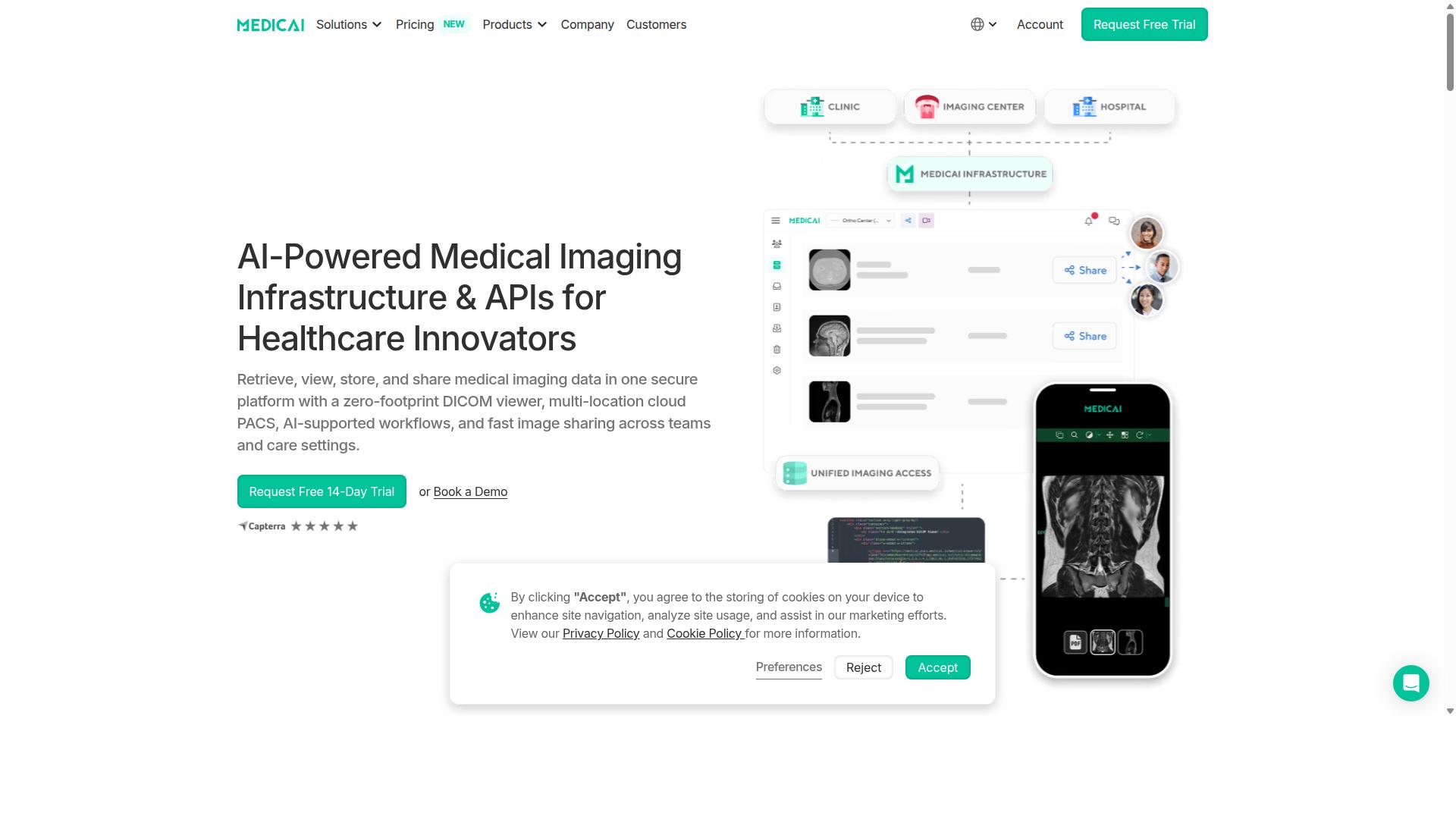
Medicai is a cloud-based medical imaging platform that allows healthcare providers to retrieve, view, store, and share imaging data within one secure environment. The platform provides a zero-footprint DICOM viewer that operates directly through standard web browsers. This approach eliminates any need for software installation or local configuration on user devices.
The system removes the requirement for on-premise servers by delivering all storage and processing through cloud infrastructure. Healthcare facilities no longer maintain physical hardware or manage server updates. Instead, the cloud PACS handles data storage, backup, and access controls through centralized management.
A single interface enables image access across multiple departments and care settings. Radiologists can review studies from any location while referring physicians view the same images through their existing workflows. This unified approach supports teleradiology by connecting remote readers with the complete patient imaging record.
The platform includes AI-supported workflows that assist with image organization and preliminary analysis. Fast image sharing capabilities allow teams to exchange studies between different facilities without physical media or complex file transfers. These features create a foundation for efficient remote reading and collaborative care across multiple sites.
Why Medicai Is the Best for Teleradiology Support
Teleradiology workflows demand fast, secure image exchange and reliable uptime. Medicai is engineered to meet these exact needs. The platform focuses on supporting remote radiologists who require uninterrupted access to studies regardless of time or location.
After-hours coverage places extra pressure on radiology teams. Instant study retrieval allows radiologists to begin diagnostic work without delays. This capability proves essential when emergency cases arrive outside normal business hours.
Real-time image sharing helps reduce the time between study acquisition and final report delivery. Shorter turnaround times support better clinical decision making. Radiologists can access current studies quickly and communicate findings to referring physicians more efficiently.
Redundancy mechanisms protect system performance during high-volume periods. Latency remains low even when multiple users access the platform simultaneously. This stability prevents workflow interruptions that could affect diagnostic accuracy.
The cloud platform supports interoperability with existing systems through standard protocols. Integration with electronic health records and picture archiving systems helps streamline operations. Teams benefit from consistent access to medical imaging data across different locations.
Security and compliance features address the requirements of healthcare environments. Protected health information stays secure during transmission and storage. Compliance standards help organizations maintain regulatory requirements while supporting remote reading operations.
Scalability allows the platform to accommodate growing volumes of studies without performance degradation. Organizations can expand their teleradiology capabilities as patient needs increase. This flexibility supports both small practices and larger healthcare networks.
Quality control measures help maintain diagnostic standards across remote reading sessions. Structured reporting tools assist radiologists in producing consistent, accurate documentation. These features contribute to improved patient care outcomes.
Emergency coverage becomes more manageable with reliable remote access tools. Night shift radiologists can maintain productivity regardless of location or time constraints. The platform supports continuous service delivery for critical cases.
Cost efficiency improves when organizations reduce infrastructure requirements through cloud-based solutions. Teams avoid expenses associated with maintaining on-premises systems. Remote access also allows organizations to utilize subspecialty expertise without geographic limitations.
Second opinion requests benefit from streamlined image sharing capabilities. Radiologists can collaborate across distances without physical media transfer. This collaboration supports diagnostic accuracy through peer consultation.
The viewer interface accommodates both desktop and mobile access needs. Radiologists can review studies from various devices while maintaining image quality. This flexibility supports workflow continuity across different work environments.
AI assistance features can help prioritize urgent cases within the workflow. Automated tools support radiologists in managing high volumes of studies. These capabilities enhance the overall efficiency of teleradiology operations.
Vendor neutral archive functionality helps organizations manage medical imaging data across multiple systems. Data remains accessible regardless of the original acquisition source. This approach supports long-term storage and retrieval requirements.
Key Features and What Makes Medicai Stand Out
Three integrated modules, storage, visualization, and workflow, form the backbone of Medicai's competitive edge. These modules work together to support teleradiology across multiple sites and specialties. The result is a unified platform that addresses the daily challenges of remote reading and multi-site image management.
Cloud infrastructure eliminates the need for local servers at each location. Radiologists gain immediate access to studies regardless of where the images originate. This setup reduces hardware costs while maintaining compliance with regulatory standards.
The system handles high volumes of medical imaging data through proven scalability. Over one million studies are transacted or processed each year. This track record demonstrates consistent performance under demanding clinical workloads.
Cloud PACS and Multi-Location Storage
A single Cloud PACS instance can serve multiple hospitals and imaging centers without additional hardware. The Vendor Neutral Archive consolidates studies from disparate sites into one accessible repository. This approach removes data silos that often slow down remote diagnostic workflows.
Automatic replication across at least two geographic regions protects against data loss. Instant failover processes maintain 99.95 percent uptime during outages. These measures ensure continuous availability for time-sensitive teleradiology cases.
Microsoft Azure partnership underpins the infrastructure reliability. The platform currently supports seventy clinics and hospitals. Over two million imaging studies have been uploaded to date, confirming the system's capacity for large-scale operations.
Zero-Footprint DICOM Viewer and Structured Reporting
Radiologists can open any study in-browser and dictate structured reports without installing software. The browser-based viewer provides measurement tools and annotation layers directly within the interface. Voice-recognition templates help populate report fields efficiently during routine interpretation.
Structured reporting standardizes output across different readers and locations. This consistency supports quality control and peer review processes essential in teleradiology environments. The zero-footprint design removes compatibility issues that commonly arise with local software installations.
Over three hundred thousand visualizations of DICOM studies occurred in the past year alone. This usage volume reflects broad adoption among the ten thousand active doctors on the platform. The approach reduces diagnosis time by 65%.
AI-Supported Workflows and Fast Image Sharing
AI triage flags urgent studies and auto-routes them to the next available subspecialist. This routing mechanism improves emergency coverage during night shifts and periods of high demand. The AI-Powered Diagnostics component assists radiologists without replacing clinical judgment.
One-click peer-review assignments streamline collaboration between remote readers. Push-to-mobile notifications reduce average hand-off delays during multi-reader workflows. These features support faster second opinion requests when subspecialty expertise is required.
The Radiology AI Co-Pilot integrates with existing image exchange processes. Fifty million yearly API transactions indicate robust interoperability with various hospital systems. This connectivity supports HL7 and FHIR standards required for seamless EHR integration across different facilities.
Pricing and Plans
Medicai offers transparent monthly subscriptions scaled to storage and connectivity needs. The company provides three distinct tiers that address different practice sizes and budgets. Each plan centers on cloud storage capacity, user access, and site connectivity without additional per-study charges.
The Starter plan costs $249 per month and includes 500 GB of cloud storage. This tier offers unlimited user accounts and no connected locations. Organizations that need basic teleradiology capabilities often select this option for initial deployment.
The Standard plan costs $749 per month and provides 2 TB of cloud storage. This tier includes unlimited user accounts and supports one connected location. Radiology groups that require moderate capacity and single-site integration typically choose this configuration.
Yearly billing reduces costs by 15 percent. The Starter plan drops to $209 per month when paid annually. The Standard plan drops to $639 per month when paid annually. Enterprise customers receive custom pricing based on specific storage and connectivity requirements.
A one-time DICOM Gateway setup fee of $1,000 applies per location. A 14-day trial of Starter plan features is available without requiring a credit card. Per-study pricing options exist for enterprise customers. Refunds are not available for partial billing periods.
Trust Signals
Certifications and performance numbers demonstrate consistent reliability and regulatory alignment.
Medical imaging platforms must prove they protect patient data while delivering uninterrupted remote reading services. Teleradiology workflows depend on this trust to maintain care continuity across multiple sites.
Without clear evidence of compliance and uptime, hospitals hesitate to move critical radiology operations to the cloud. Regulatory alignment provides the foundation for safe image sharing between institutions.
Security and Compliance Certifications
HIPAA and GDPR compliance plus FDA and CEE clearance underpin every data transaction.
Medicai encrypts all medical imaging data in transit using TLS 1.2 protocols. Data at rest receives AES-256 encryption to prevent unauthorized access during storage periods.
Annual third-party penetration tests identify vulnerabilities before they reach production systems. Audit logs remain available for seven years to support regulatory investigations and compliance reviews.
OWASP security guidelines govern development practices throughout the cloud platform. These measures enable safe DICOM exchange between radiologists working in different locations.
Proven Scale and Performance Metrics
Over one million studies are processed yearly, backed by 50 million API transactions and sub-second viewer response.
Medicai currently stores 1.7 million studies while handling 300,000 DICOM visualizations last year. This volume demonstrates the platform's capacity to support large health systems.
The documented 99.95 percent uptime record ensures radiologists can access images during emergency coverage periods. Subspecialty consultations proceed without delays from platform downtime.
These metrics reflect consistent performance across 70 clinics and hospitals with more than 10,000 active doctors. The scale supports multi-site deployments requiring reliable image sharing and reporting capabilities.
Who Should Use Medicai
Hospitals, imaging centers, and specialty groups handling high imaging volumes benefit most from Medicai. These organizations often need reliable teleradiology support across multiple sites and locations.
Many medical specialties depend on fast access to remote reading services. Orthopedics, neurology, oncology, radiology, cardiology, ophthalmology, ob-gyn, pulmonology, dentistry, and gastroenterology each require timely image review from qualified radiologists.
Any provider needing remote or multi-site reading fits the profile of Medicai users. Virtual care providers and telemedicine platforms also rely on cloud-based image sharing to connect patients with radiologists who may be located elsewhere.
Teleradiology services use this platform to coordinate cases when local staff cannot cover all shifts. Personal injury lawyers and tumor boards access medical imaging through the same system for case review and collaboration.
Clinical trials and medical education organizations store and share DICOM studies through Medicai. Patients can view their own images through the patient portal when providers grant access.
The platform supports structured reporting and second opinion workflows. Hospitals and specialty groups gain scalability when imaging demand increases without adding physical infrastructure.
Final Verdict
For facilities seeking a compliant, scalable teleradiology platform, Medicai delivers measurable speed and cost advantages.
Medical facilities need reliable partners who understand the demands of remote reading and image sharing. Medicai provides a cloud platform designed specifically for these clinical workflows.
Speed matters when radiologists review urgent cases across multiple sites. The platform supports quick image access while maintaining security standards that healthcare organizations require.
Cost efficiency becomes critical as imaging volumes grow. Medicai offers pricing structures that scale with facility needs rather than charging fixed rates regardless of usage.
Compliance remains essential for any teleradiology solution. The platform addresses regulatory requirements through its design and architecture choices.
Facilities can reach Medicai USA at 7901 4th St N, STE 300, St. Petersburg, FL, 33702 by calling +1 (832) 220 1035. In Romania, Medicai operates from 53-55 N Filipescu, 5th Floor, Sector 2, Bucharest, 020961 with phone access at +40 316 305 875.
Email inquiries go to [email protected] for scheduling demos or discussing pricing options specific to each facility's requirements.
Recommended Resources: